
manesboro island circumnavigation, fl
manesboro island circumnavigation
brett young of newnan, Georgia. Age 48
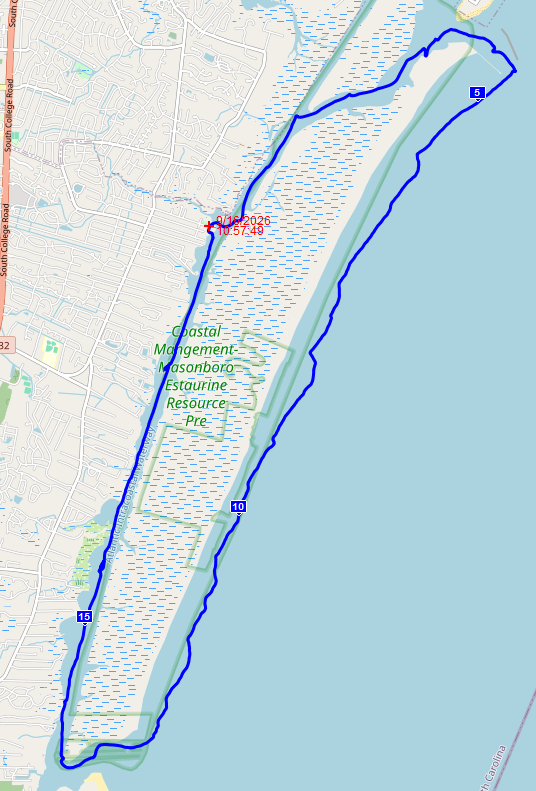
19.6 miles
5 hours 23 minutes
this is the overall fastest time on this route
Unsupported, Solo Male
Start: Trails End Boat Ramp N.C. September 16th, 2026 6:57AM Eastern
Finish: Trails End Boat Ramp N.C. September 16th, 2026, 12:21PM Eastern
Support Crew: none
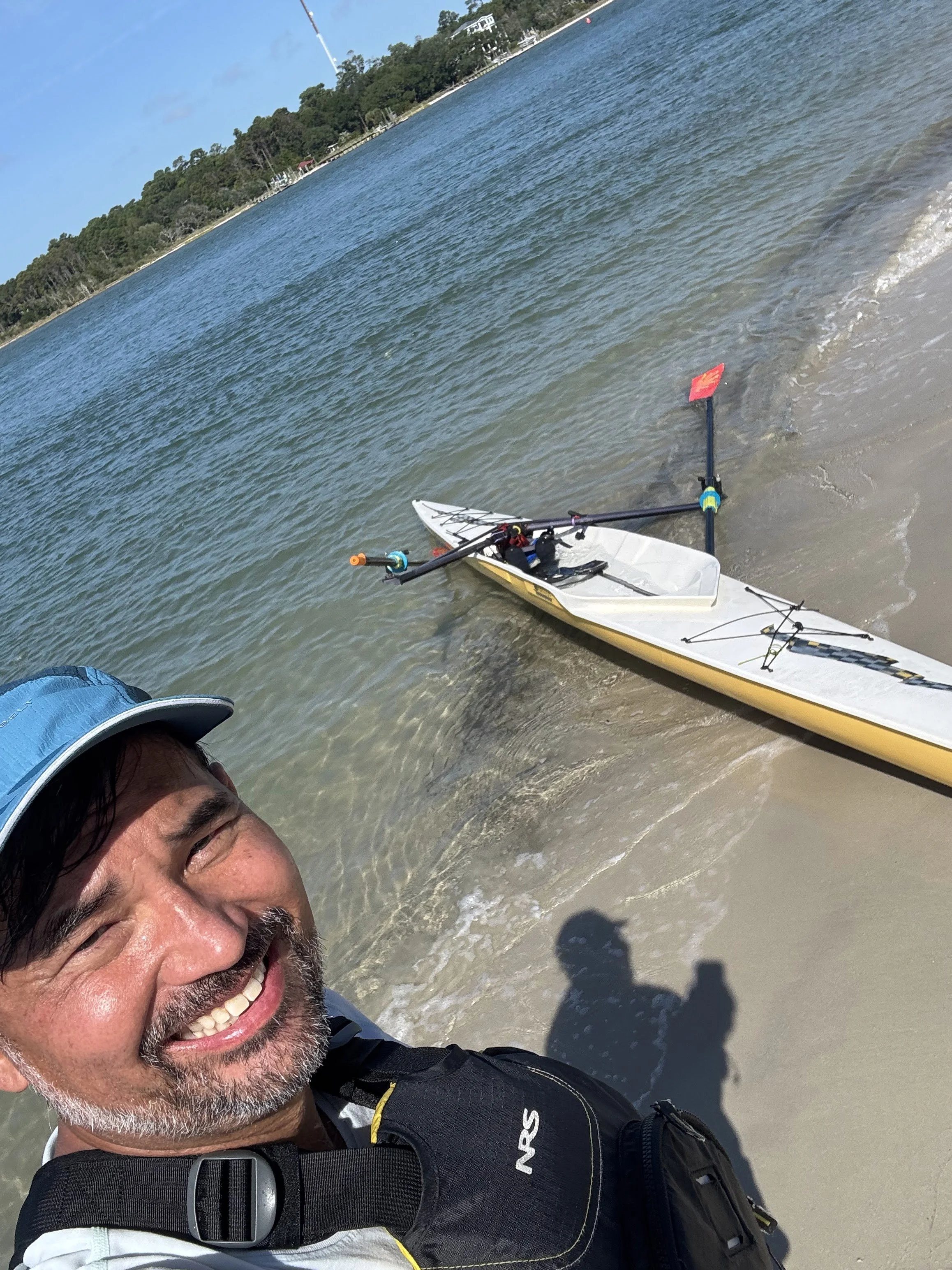
Boat: Boat: “Cambridge” by Little River Marine (rowing shell)
Route Description from Brett:
This route is a circumnavigation of Masonboro Island in North Carolina and is a combination of protected waterway and open ocean. Masonboro Island is the largest undisturbed barrier island along the southern part of the North Carolina coast and is located approximately five miles southeast of downtown Wilmington, in the most populous part of the North Carolina coast. The island is bounded by the Atlantic Ocean to the east, the Atlantic Intracoastal Waterway to the west, Masonboro Inlet to the north, and Carolina Beach Inlet to the south. The start and end is Trails End Boat Ramp in Wilmington, NC. There is no structural difference between a clockwise or counter-clockwise traversal but tide, current, and weather are important factors. The island is uninhabited, protected as a preserve, and accessible only by car. Camping is permitted. More info from the North Carolina Dept. of Environmental Quality: http://www.deq.nc.gov/about/divisions/nc-coastal-reserve/reserve-sites/masonboro-island-reserve
About the Boat (from Brett)
The “Cambridge” model by Little River Marine has been in production for over 20 years and is marketed as a coastal rowing shell. The marketing, however, is a vestige from an earlier pre-racing era of coastal shells and the Cambridge bears little resemblance to a modern coastal boat. You’re probably familiar with long, skinny competitive rowing shells, used on calm rivers and lakes. Coastal rowing shells are designed for rough water rowing with waves and chop with bailers for removing water from the cockpit, a flared or cut stern for better downwind surfing, and bows designed for waves. The only coastal shell attribute the Cambridge carries is more stability than a typical flat-water boat – no bailer and roughly the same geometry as a calm water shell, but wider. My boat is 21 feet long, 25” at its widest, with Concept2 oars.
Trip Report from Brett:
What Went Well
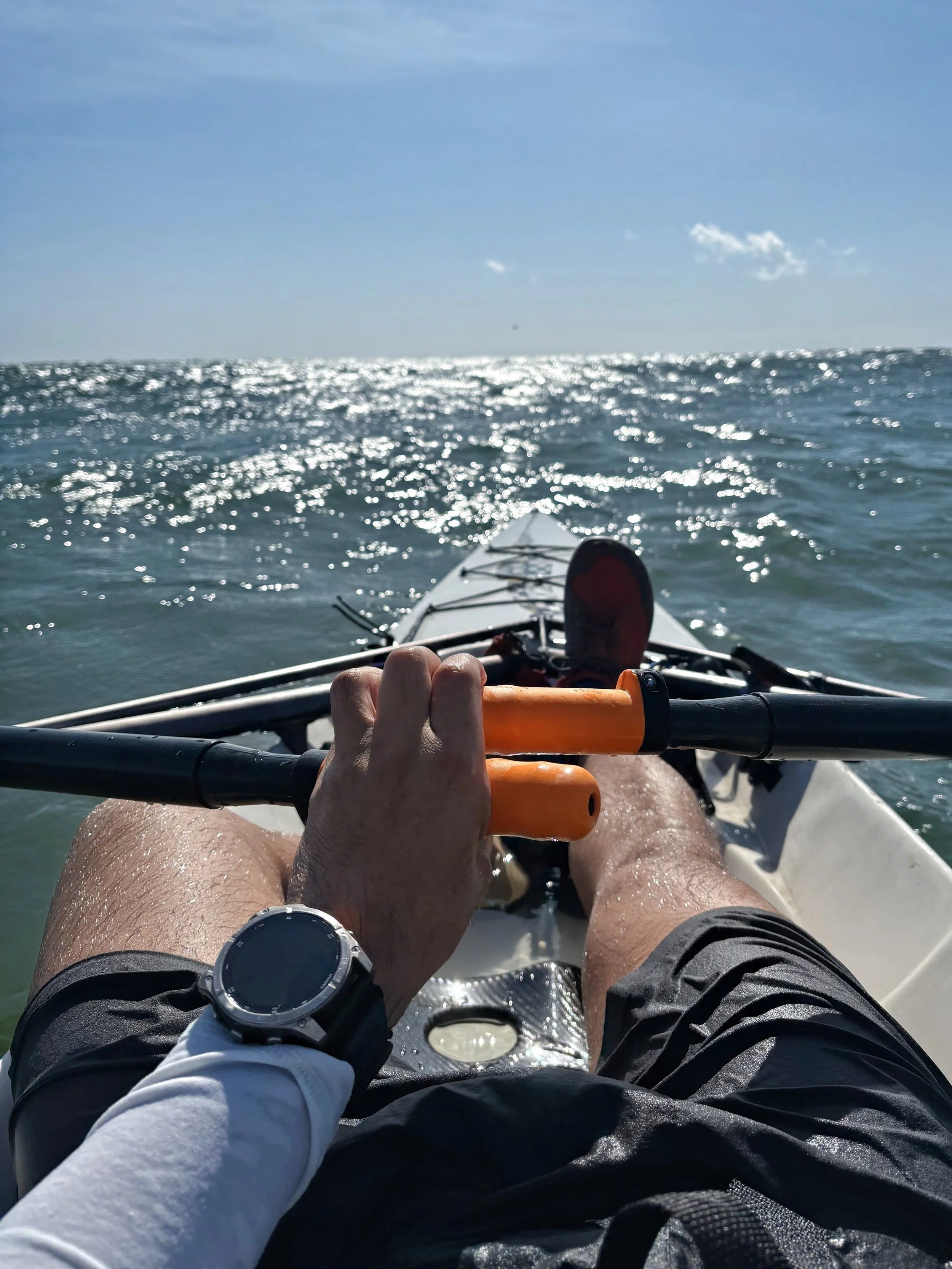
Managing Wind, Waves. Conditions weren’t expected to be ideal, with winds at 8mph, gusting to 14mph and choppy waves at 2-3 feet. At the northern inlet of Masonboro Island, while looking south from the protection of the breakwater at about 8am, I could see disorganized swells in the open water, breaking waves along the shore, and the wind felt stiffer than 8mph. I knew that as soon as I turned south from protection, it would be very difficult to row back to protection because wind, waves and current would quicky push me south. I strongly considered turning back.
In the end, I effectively rowed in the open water, only involuntarily left the boat in an area where that would be expected and managed to self-rescue in water with depth. Overall, a win.
Navigation. Compared to previous past long rows, my navigation was much better. I always knew my distance to the next waypoint, whether I was on-route, and I spent much less time checking devices for info.
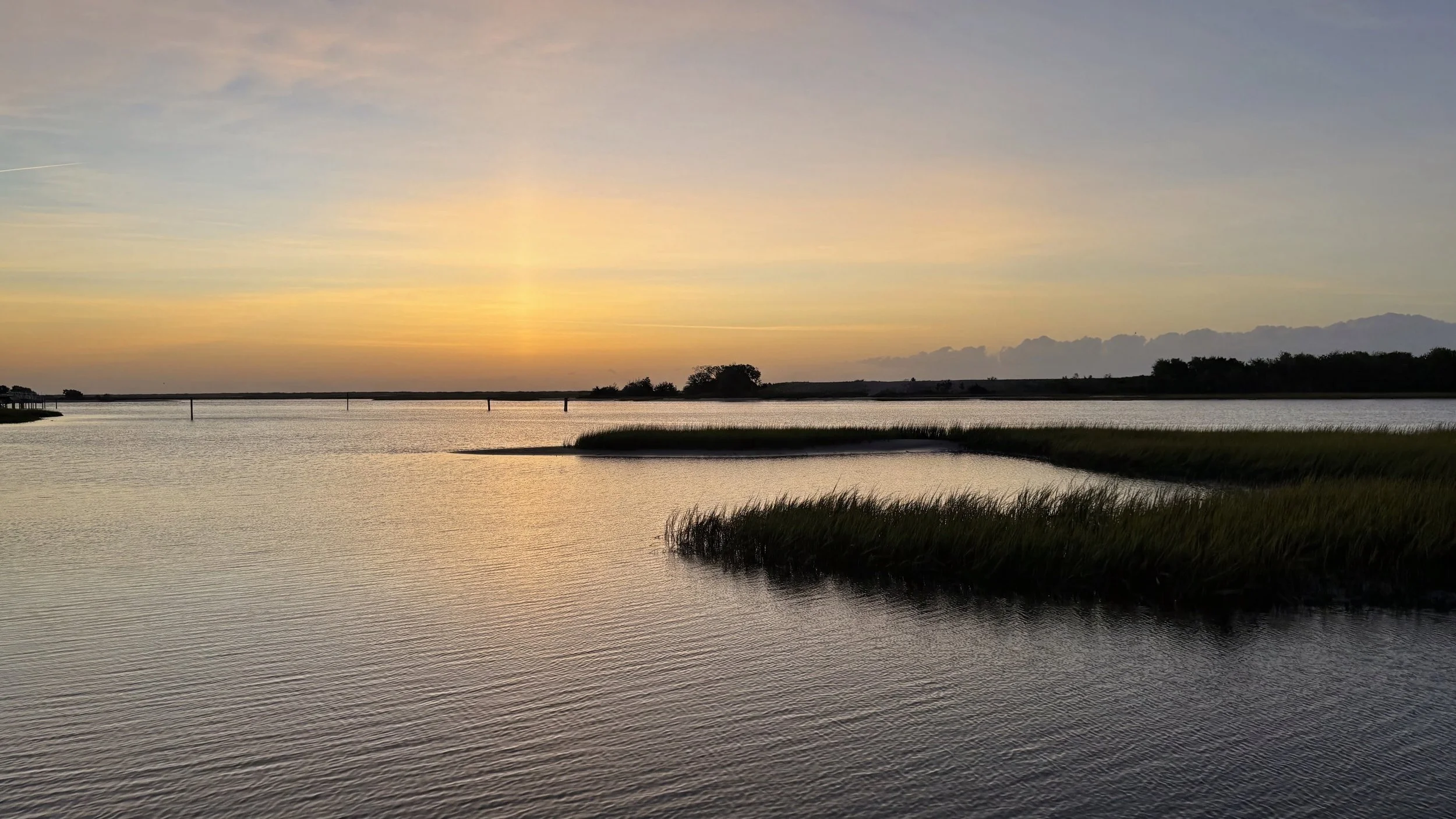
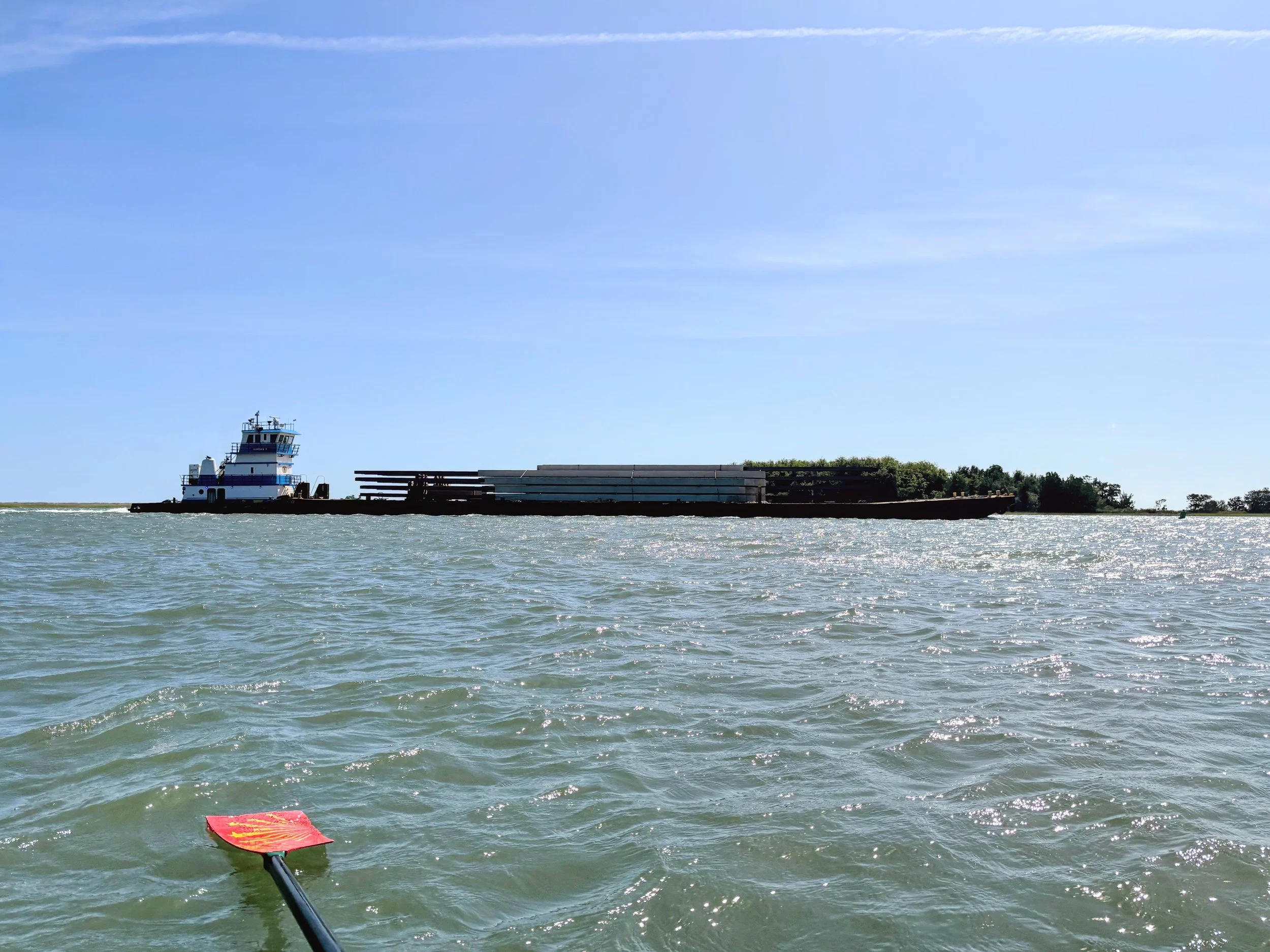
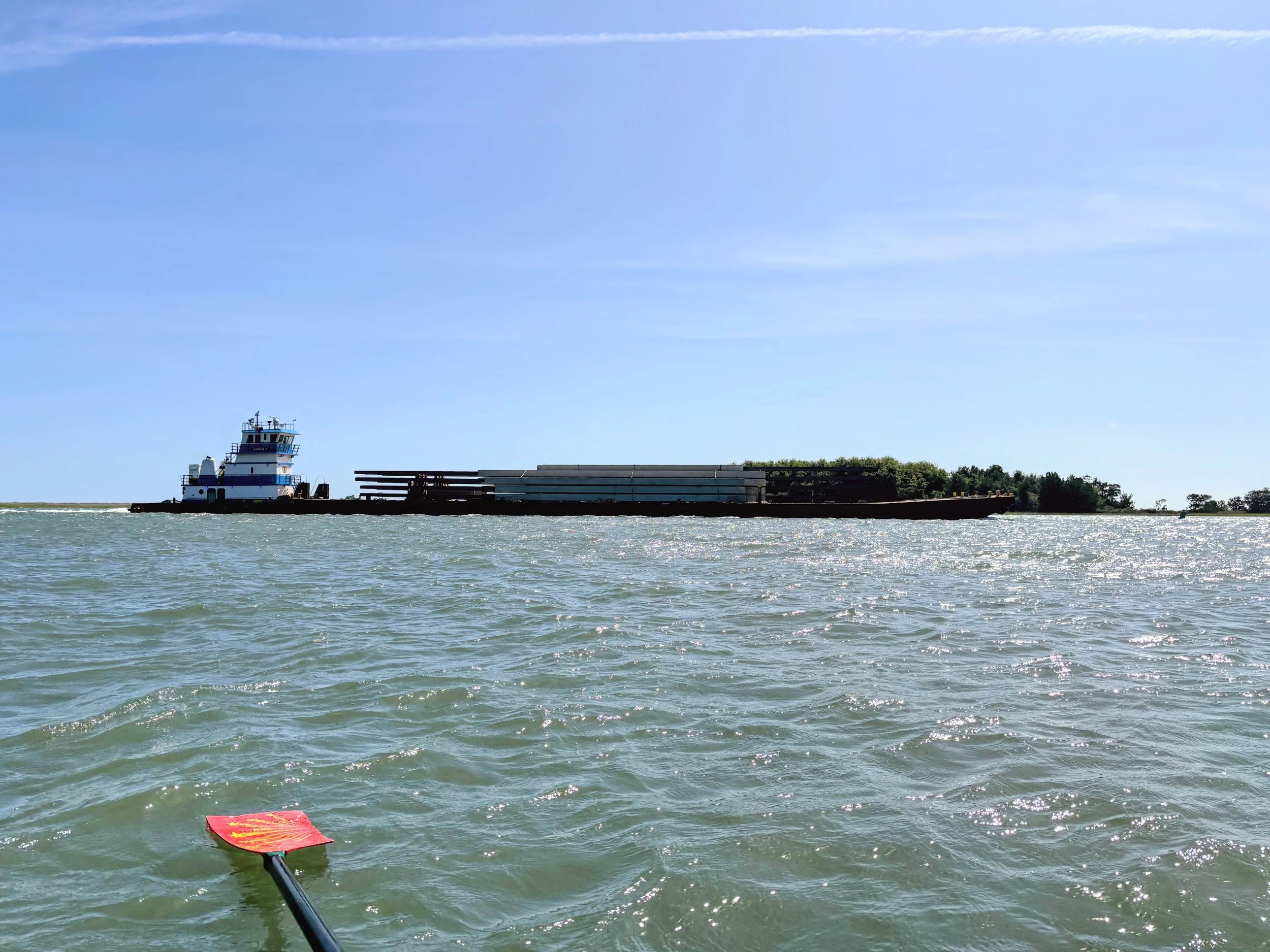
Route & Environment. Jiminy crickets, it was beautiful out there. Juvenile pelicans hovering overhead, checking me out. Fish backlit on cresting waves. Blue water with so much texture. Perfect fall weather, 80F water.
What Went Poorly
Boat Condition in True Coastal Rowing. This was the roughest water this boat has likely ever encountered, which turned into a test. A coastal shell in these conditions needs a self-bailer. As water enters the cockpit, it increases weight which slows you down but, more importantly, decreases stability. If water is entering the cockpit, you are also in conditions that require both hands on the oars. Manually bailing water then becomes a hard necessity to choose. When I went to lift the boat at the dock after the row, I was shocked to find it had doubled in weight because there was water in the hull. That means I have at least one leak to chase. I could see that the stern was submerging in the waves and the likely leak location is under the gunwale in the rear. Because I’m not watching the front of the boat, I don’t have a great feeling for how it was behaving in the waves and there might be a leak up there, too
Pace. My final time was 5 hours, 15 minutes over a distance 19.6 miles. That’s a net pace of 3.7mph or 5:00 per 500 meters. My moving time would be above 4mph but can only roughly be estimated because I was moving even when I wasn’t rowing. Given the very strong current assist, quartering tailwind, and waves, I thought the ocean side would be much faster. I found it was very hard to get full strokes because of the waves which, in hindsight, weren’t extraordinary. I may consider adjusting my oarlocks up so I have more wave clearance and looking for training techniques to be more productive
Results
I will add fixed video cameras on the boat because the conditions were more beautiful than shown in my photos and me falling out of a boat in waves would be entertaining. And I have a decision to either a) add a self-bailer to this boat or b) donate this boat to the rowing non-profit and upgrade to a modern coastal scull.
All in all, coastal rowing for time is much more fun than golf.