
Missouri River overall fastest known paddle Details
Missouri River Fastest Known Paddle:
24D, 16H, 51M
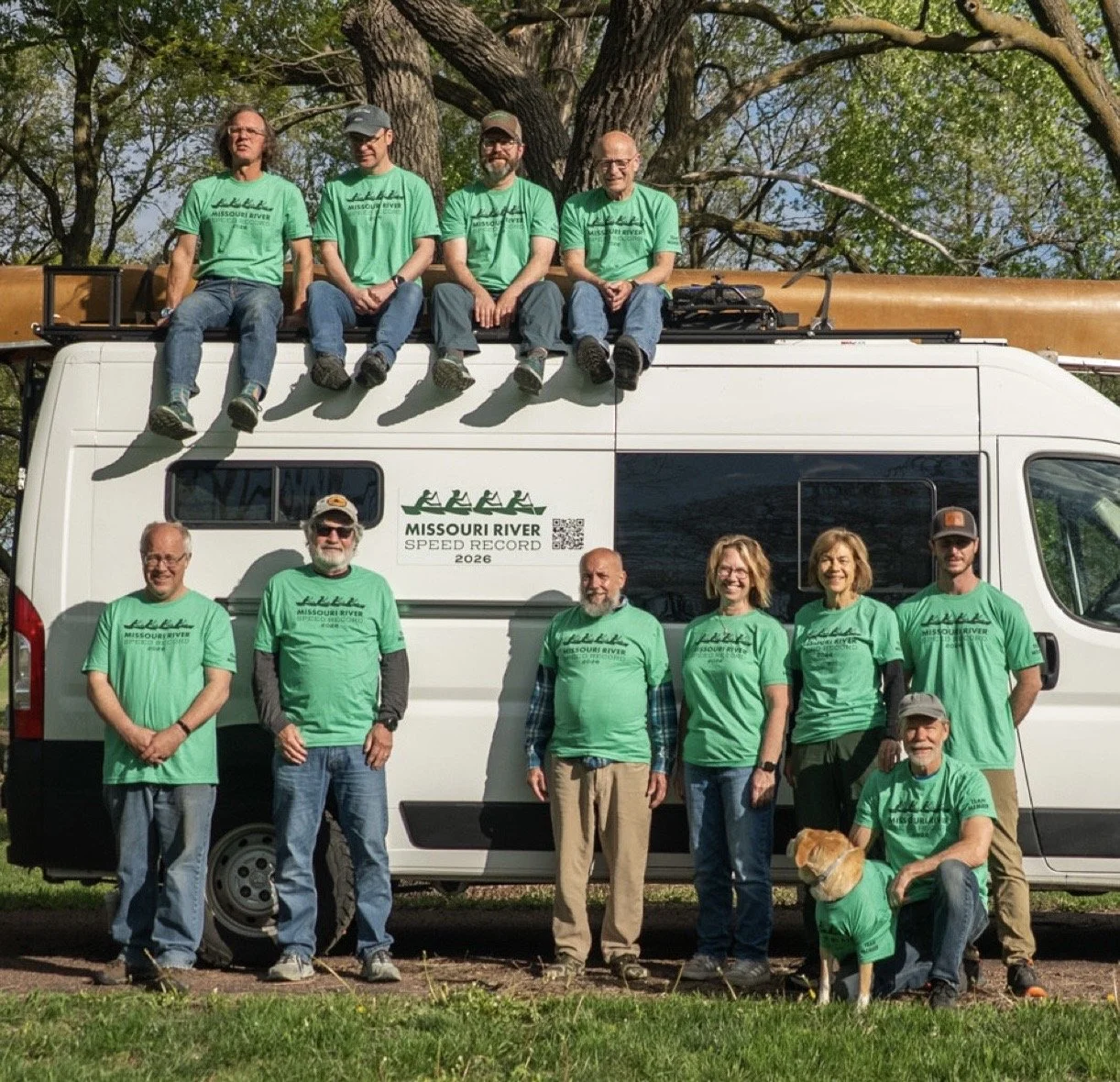
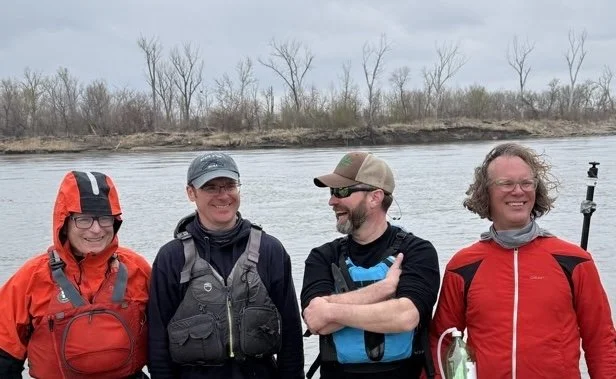
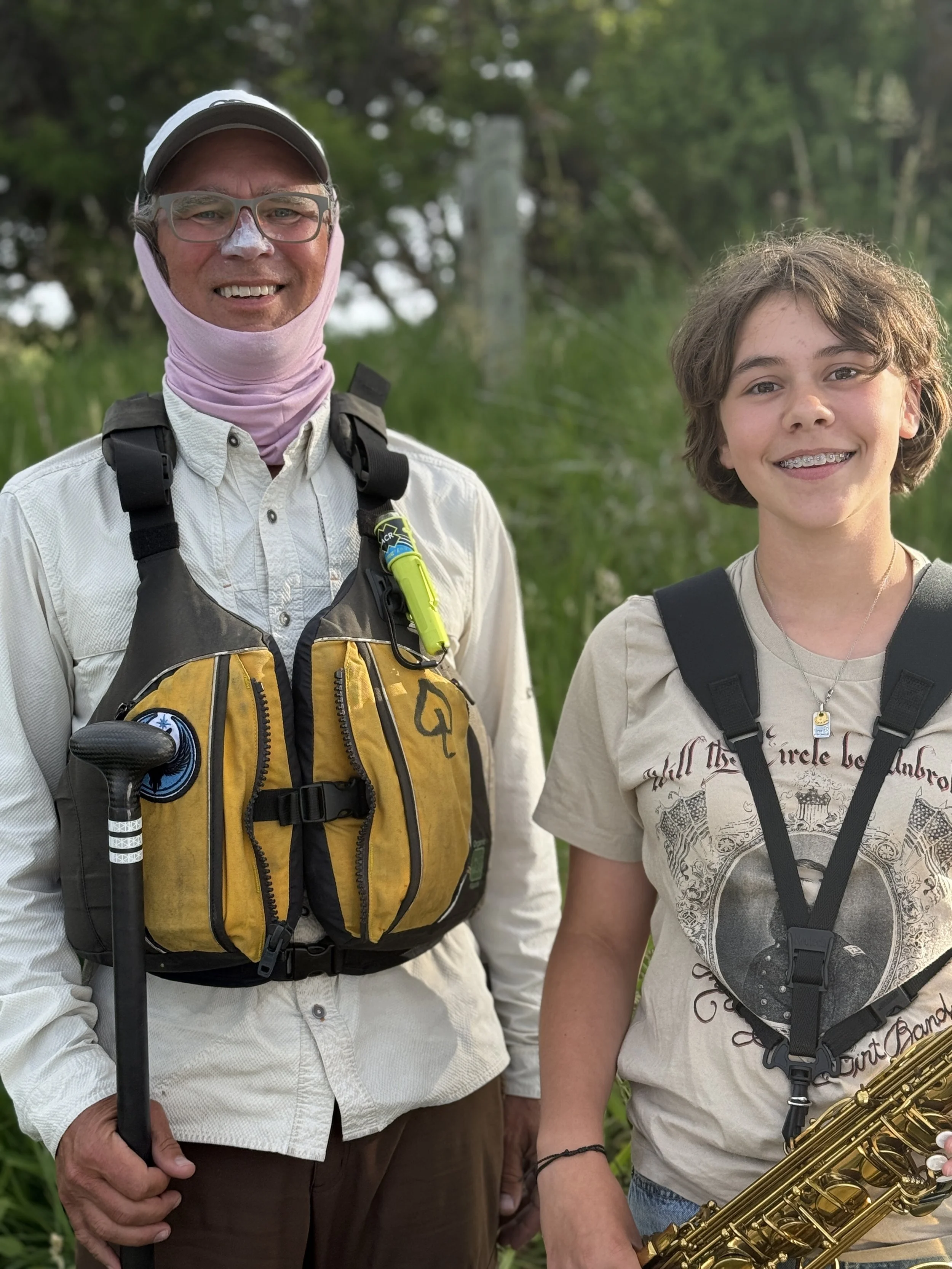
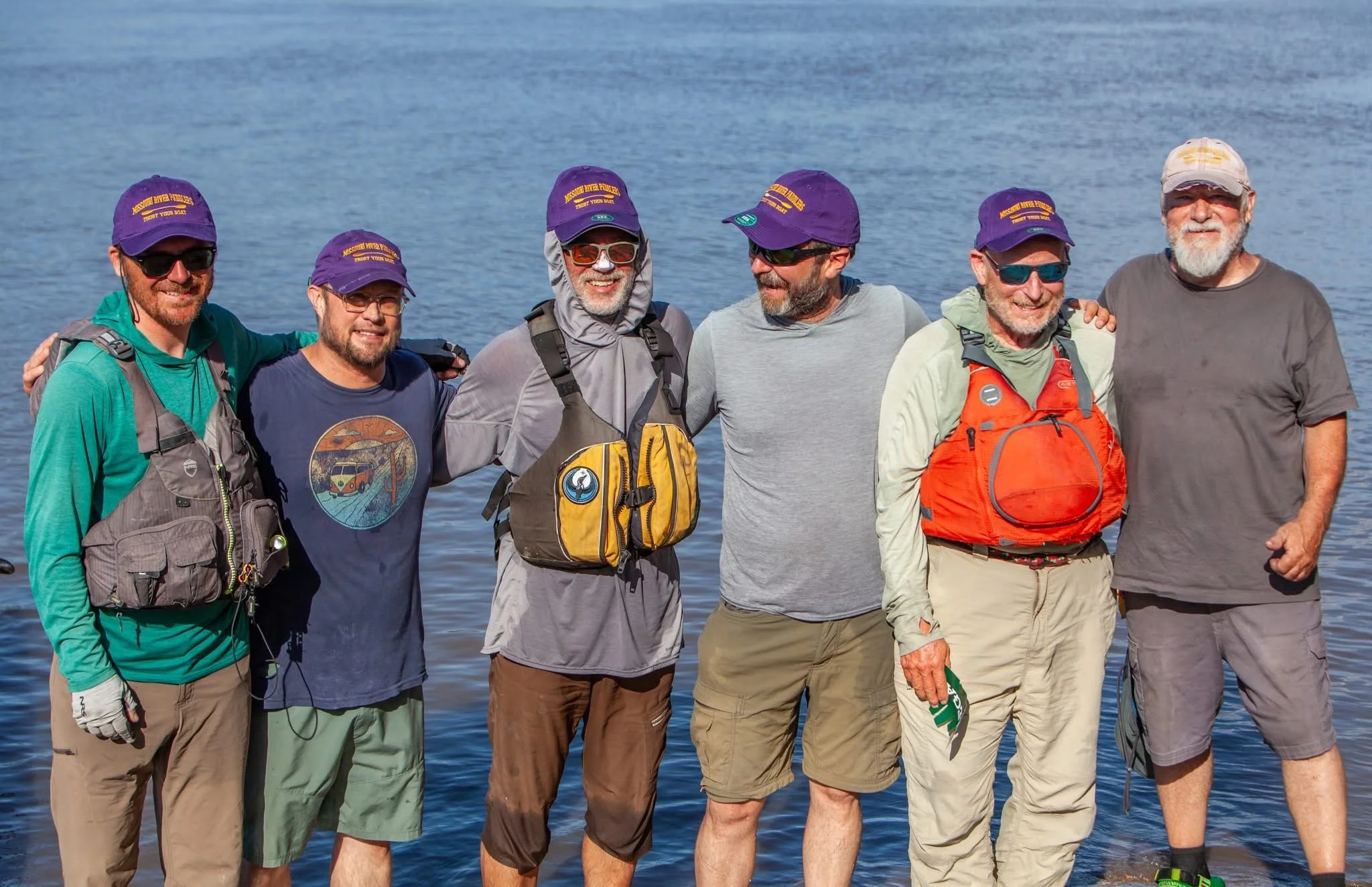
Scott miller, scott duffus, curt leitz & lada zednik
Scott Miller, 46, of Minneapolis, MN
Scott Duffus, 69, of Owatonna, MN
Curt Leitz, 55, of Duluth, MN
Lada Zednik, 42, of Rockford, MN
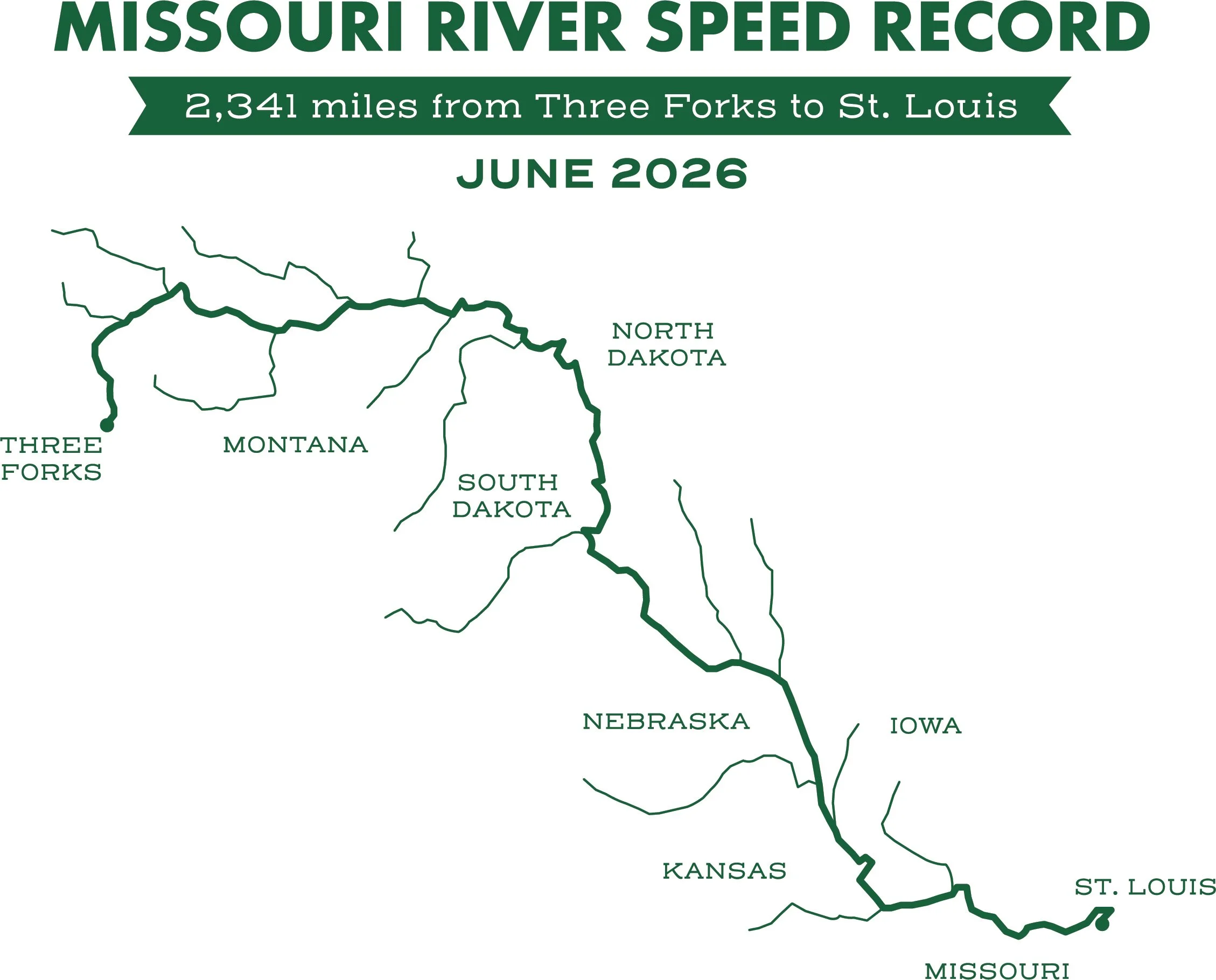
Start: Missouri River headwaters, Montana 2pm, June 23, 2026.
Finish: Top of Chain of Rocks By-Pass Canal on the Mississippi. 7:51am, July 18th, 2026
Supported
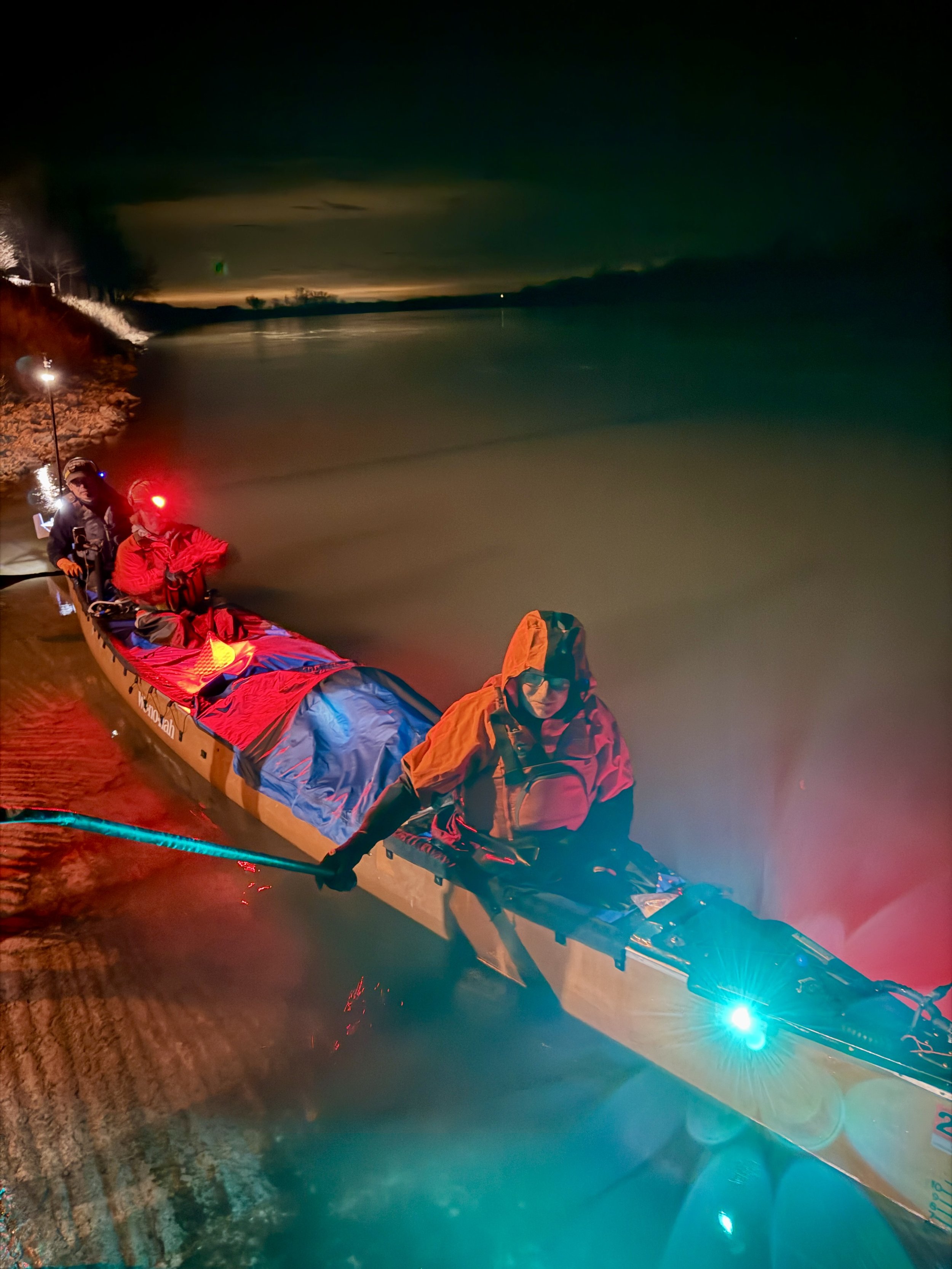
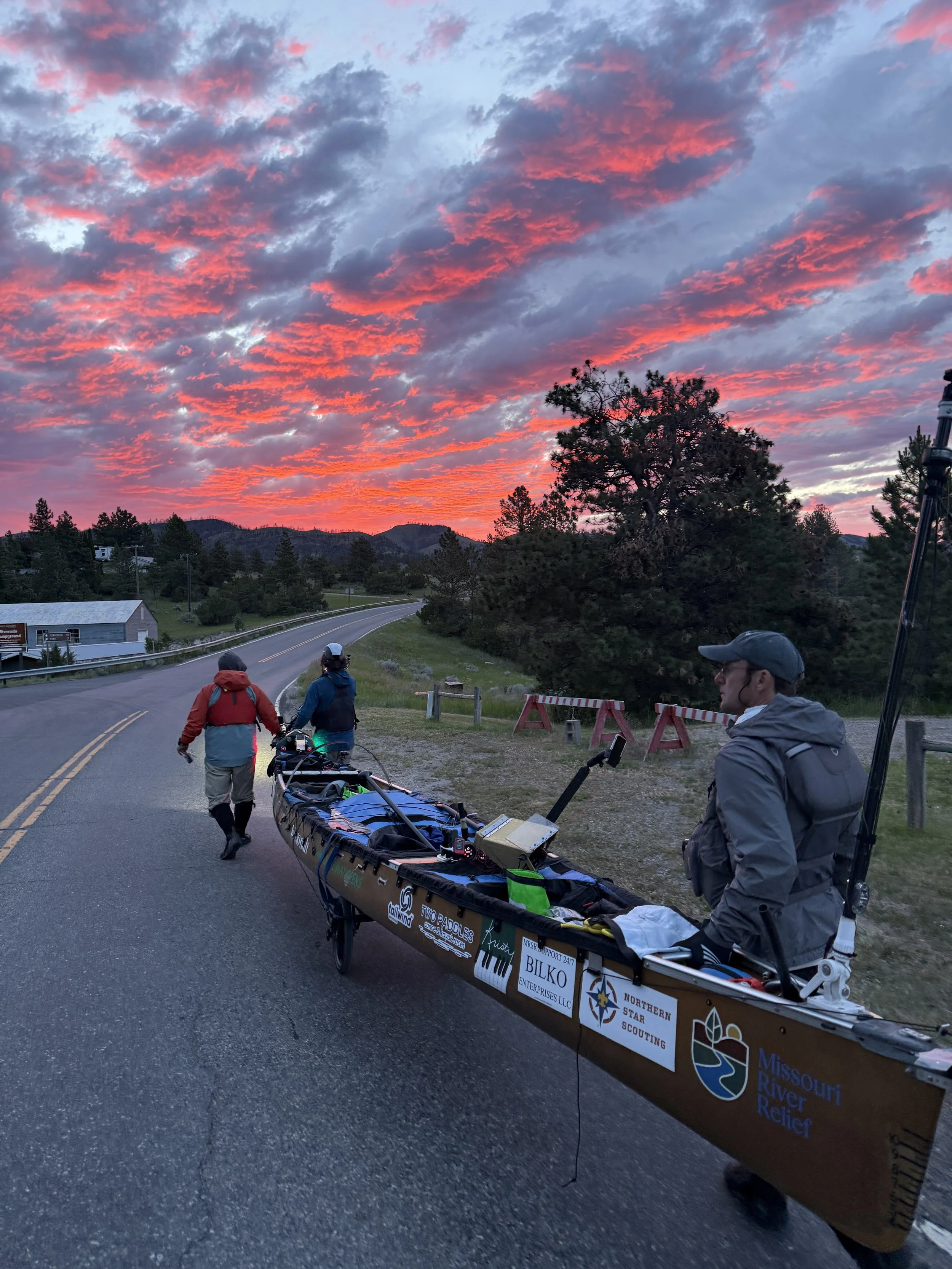
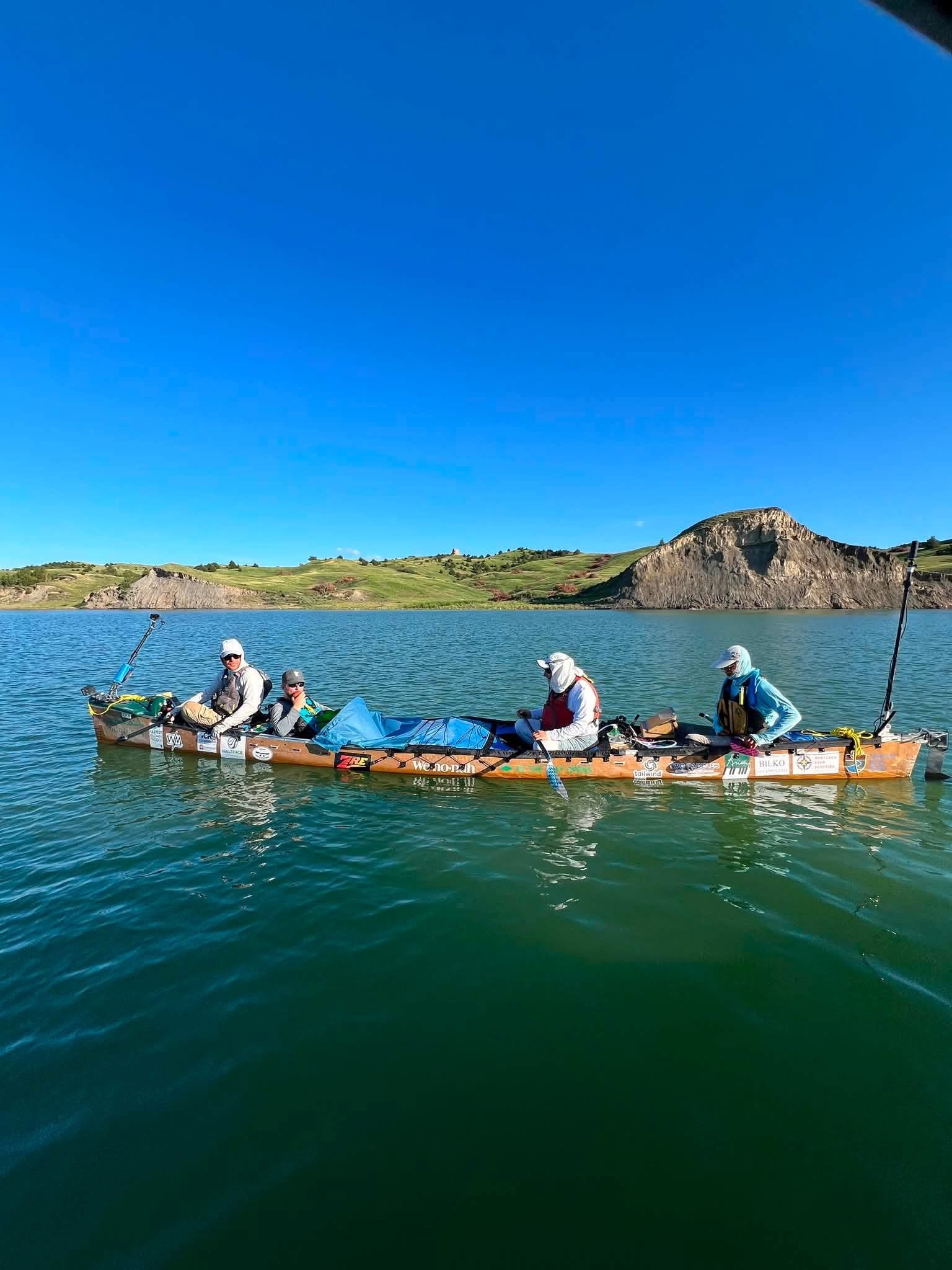
Boat: Wenonah Minnesota 4 Canoe (4 person canoe)
GPS Tracking: Garmin Inreach 2
Trip Report from Scott Miller:
We planned this trip for almost two years, with a goal to break the record set in 1980 by legendary paddlers Verlen Kruger and Steve Landick. Their record time was 33 days, 18 hours and 34 minutes and you can read about it here. We thought we could do it in 25 days but we knew that weather (especially wind on the big reservoirs) could cause us to be grounded on shore for hours or even days, and that the trip is so long it would be hard to say for sure. But we set a goal of 25 days. Then to our astonishment, Peter Larson broke the record shortly after we started our trip. Peter didn’t set out to break Verlen and Steve’s record; his goal was to establish a solo record, but he was so fast he realized he had a shot and set the new record at 32 days, 6 hours and 7 minutes. You can read all about Peter’s trip here. We had felt like we had some breathing room in case something went wrong, but Pete’s record made us feel a little stress!
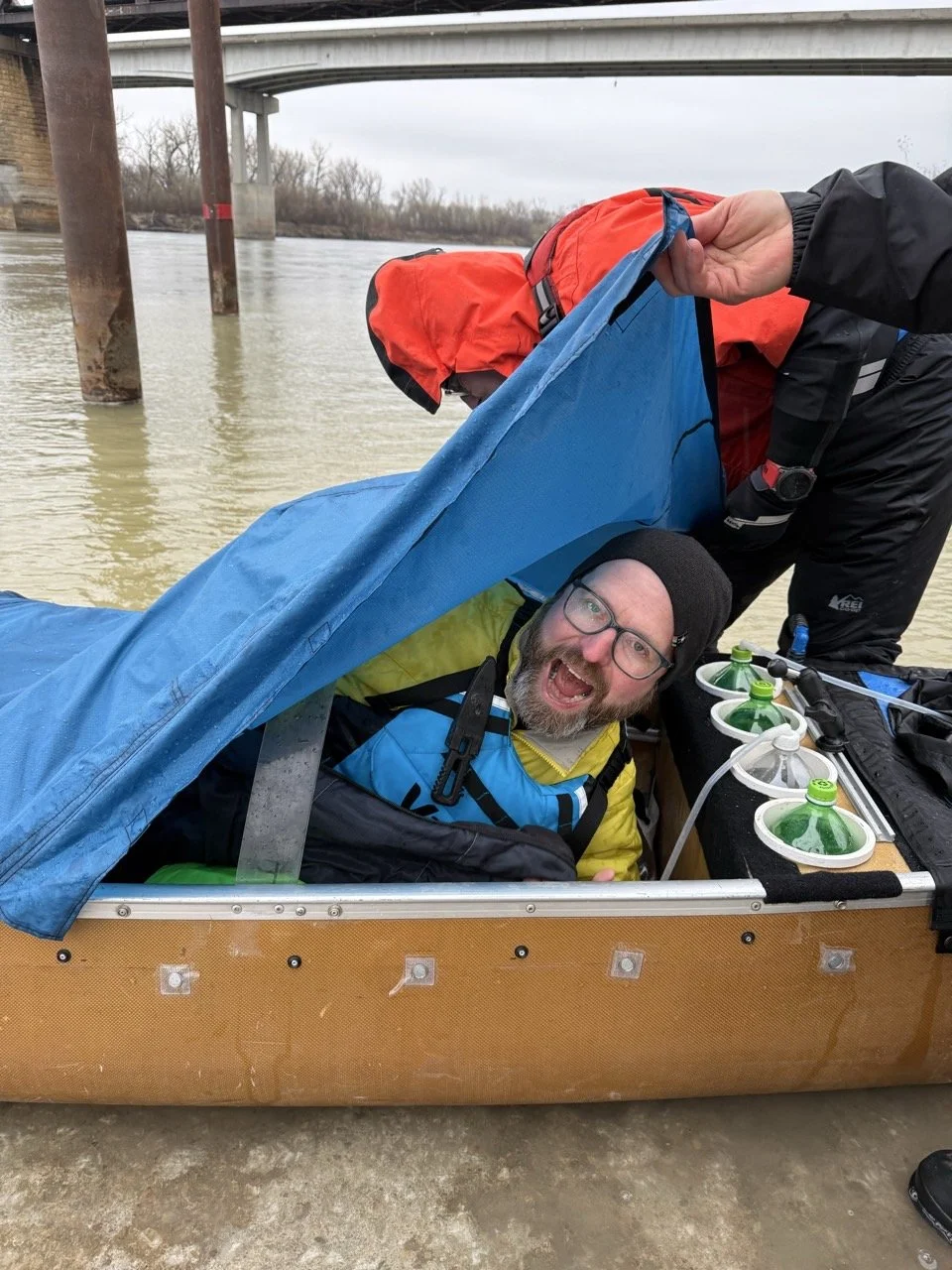
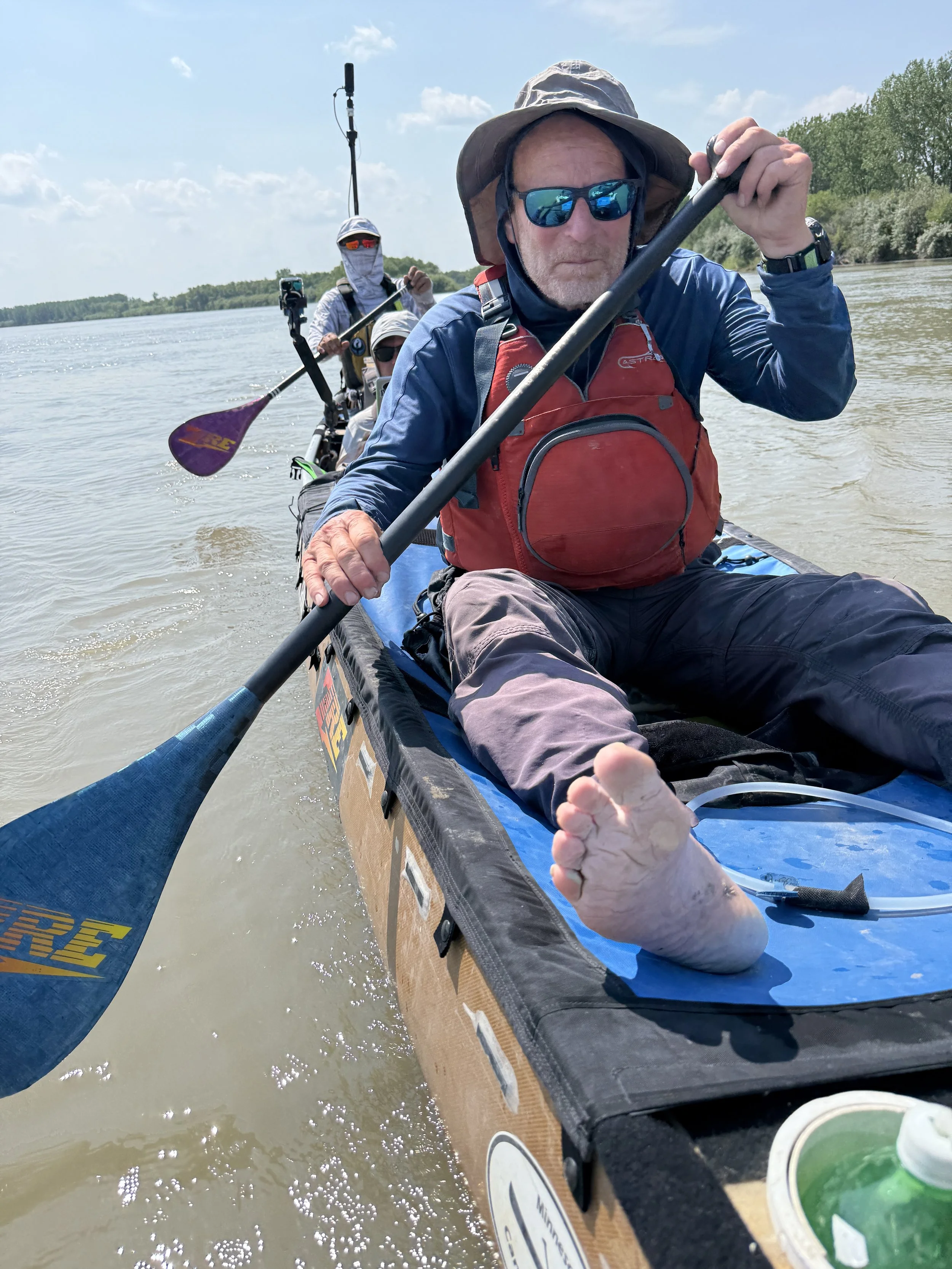
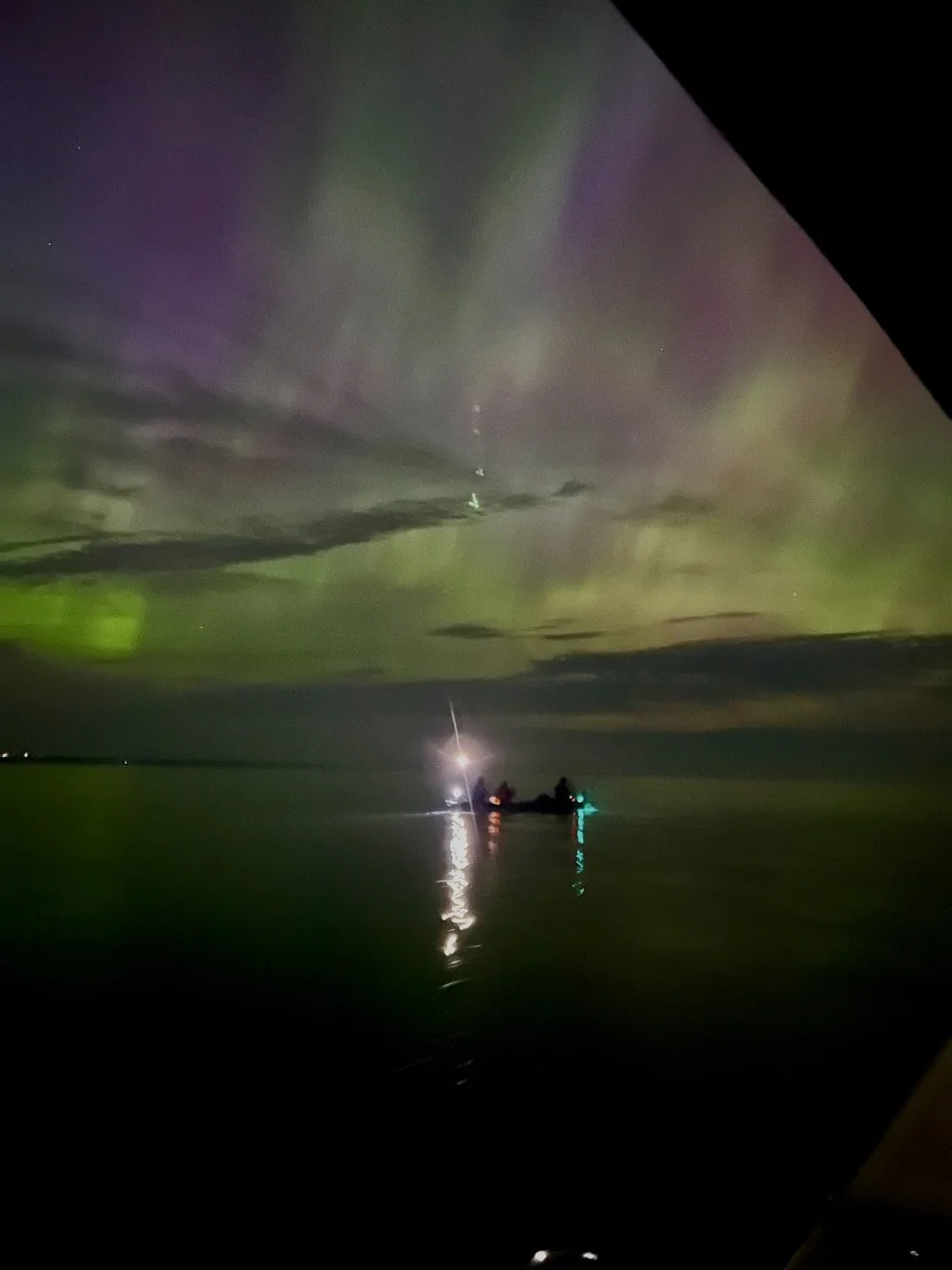
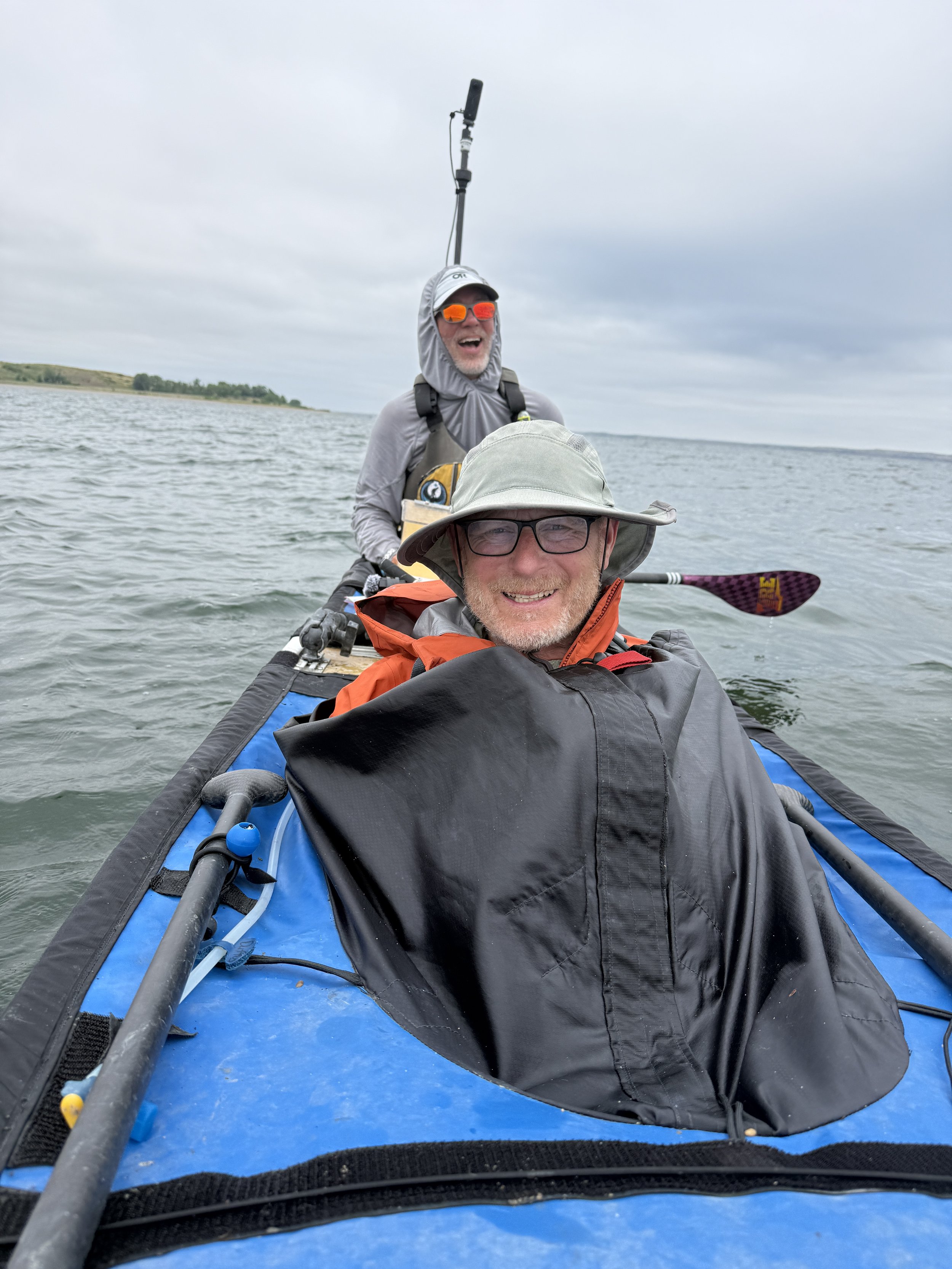
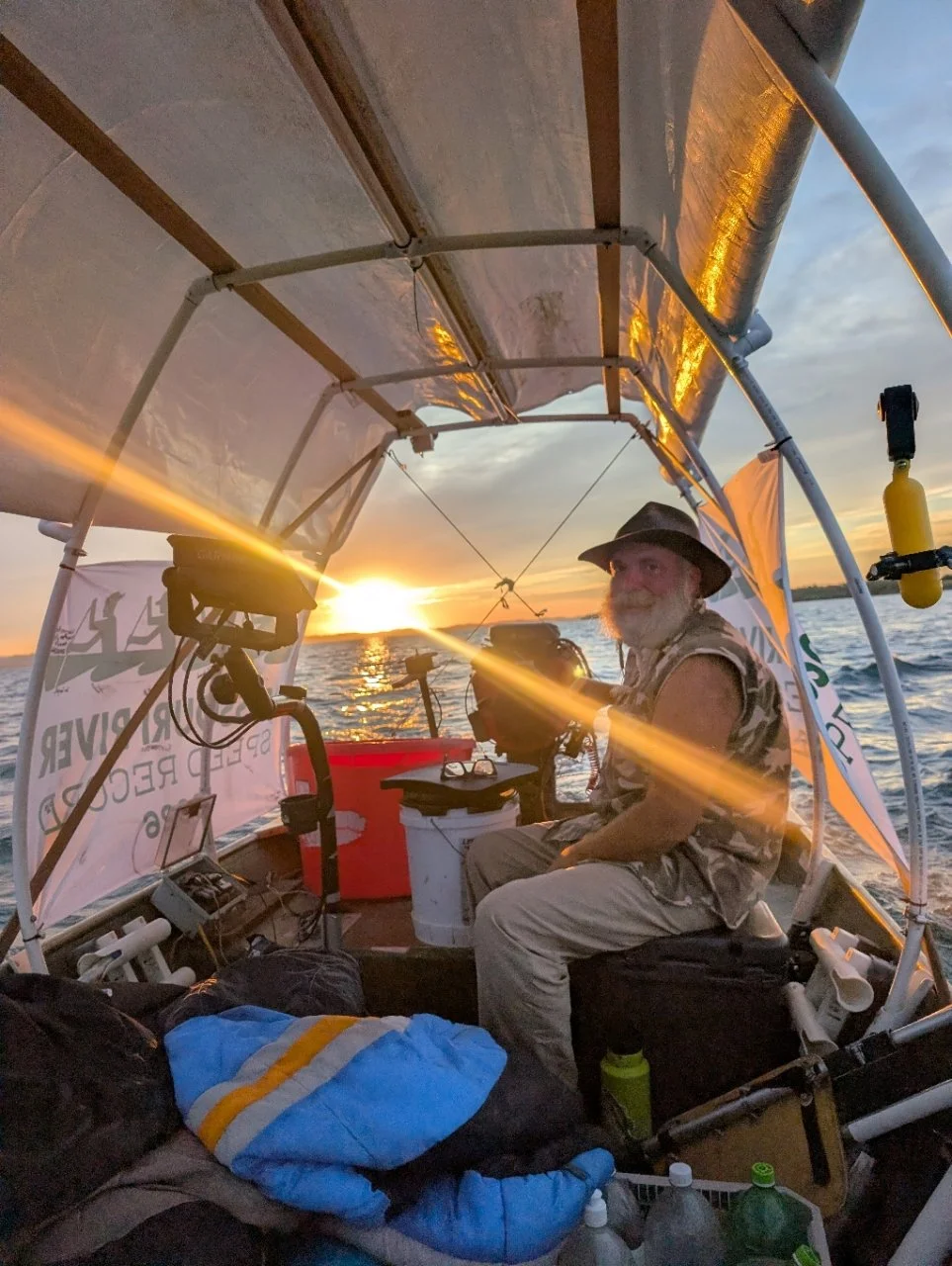
We were a four man team that had a strategy of sleeping one or two people at a time in the middle of our canoe, beneath a special canopy tent made by Scott Duffus. I had used this strategy to set the Fastest Known Paddle time for the Mississippi River in 2023. This strategy ultimately proved successful on the Missouri River as well but it was more of a challenge on the Missouri since the Missouri has so many more miles of flatwater due to the massive reservoirs.
We also had an extensive support crew and documentary film makers from Wilderness Mindset.
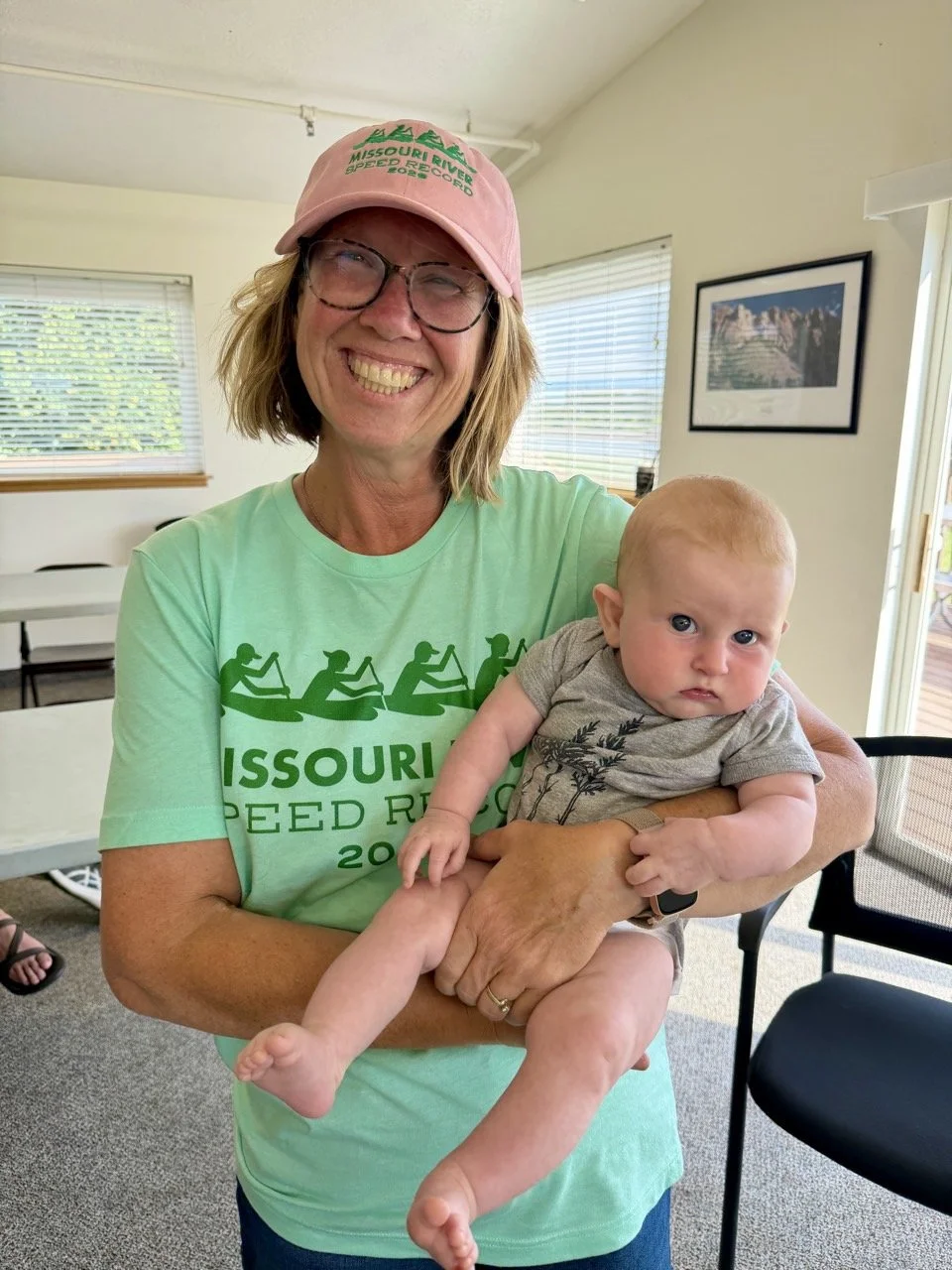
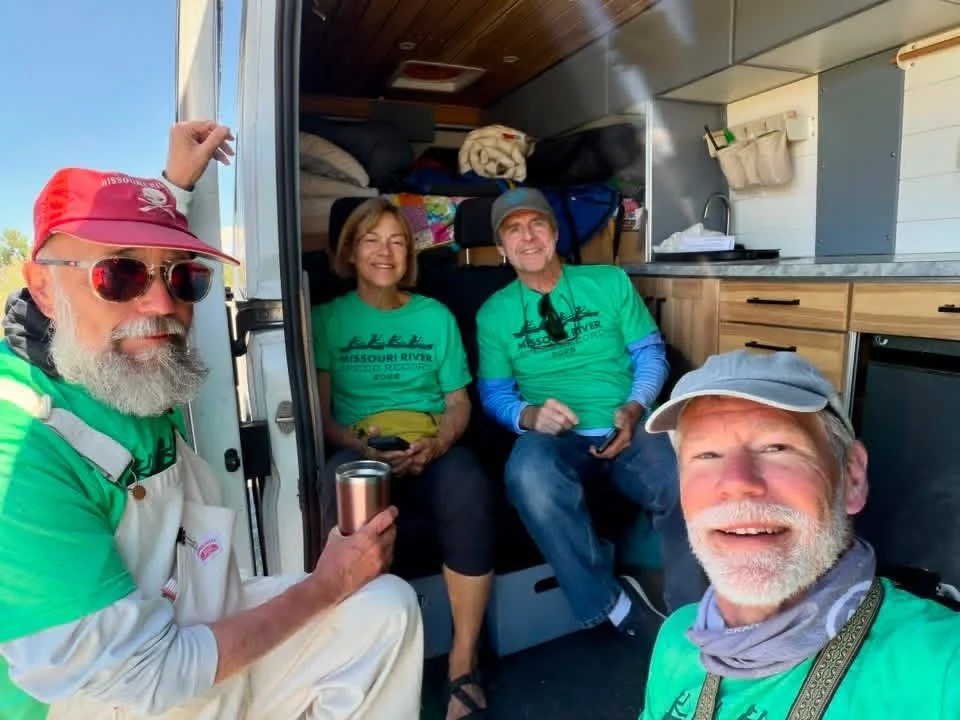
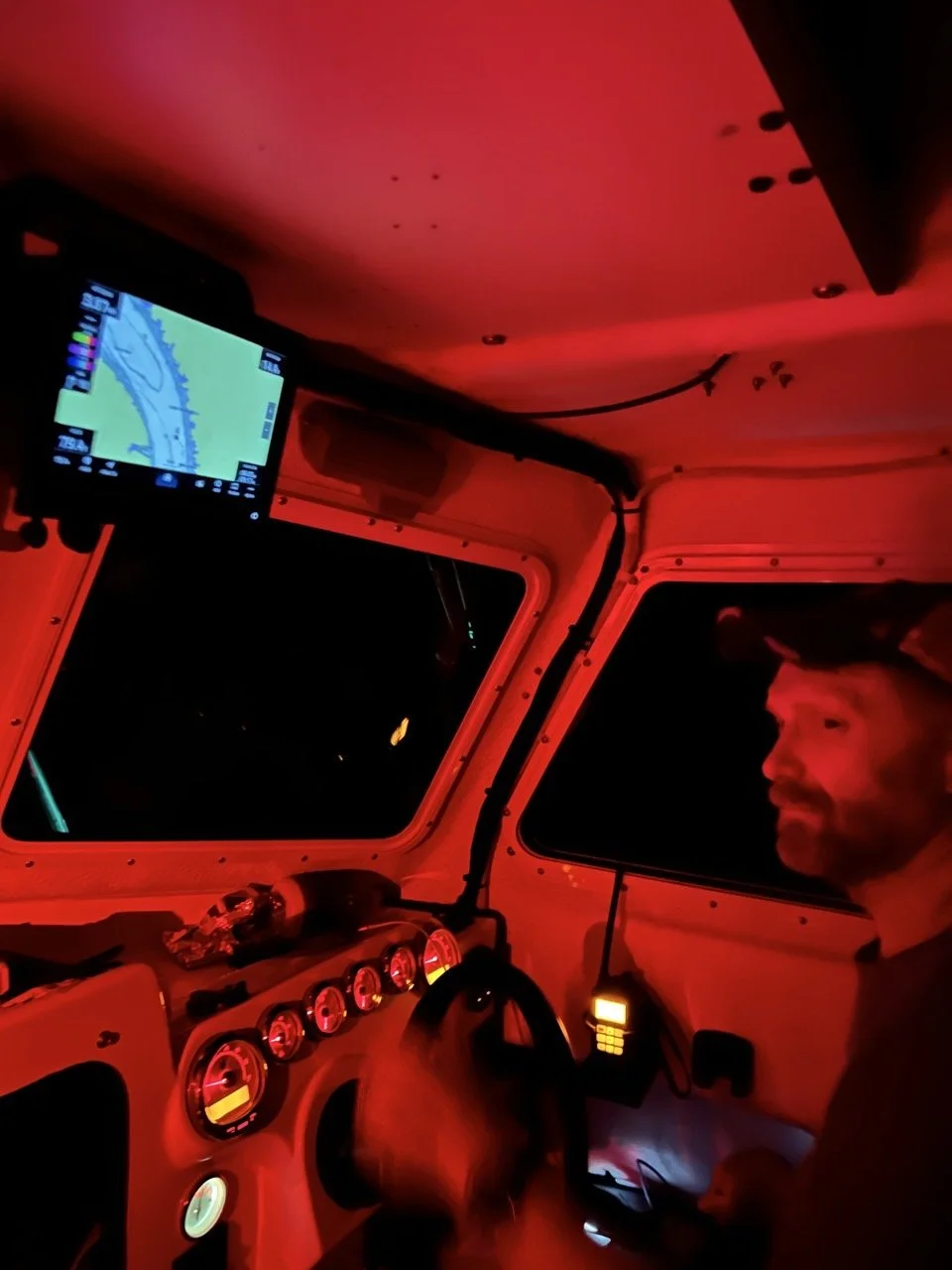
Our support crew was extraordinary and included a large shore support crew that utilized RV’s to set up base camp and cook food for everyone. They moved every 24-48 hours. We also had three support boats that could get food and water from the shore support crew and give it to us as needed. One support boat was a shallow “mud” boat called Scooter, captained by Jim Guffey; this boat accompanied us on all the shallower sections of the river. We had two other support boats that accompanied us on the big reservoirs and on the lower channelized river. The Western Flyer was captained by Scott Mansker and the Mo’Betta was captained by Mike Cooper. The documentary film crew was able to film from the support boats much of the time and also used drones; an early trailer can be viewed on YouTube.
The Missouri River was very challenging, especially all the flatwater on the reservoirs. Our canoe was heavy and hard to move without any help! Especially when we had one or two people sleeping in it. But we kept at it and tried to spend as little time on shore as possible. We had an especially harrowing time at one point on Lake Oahe when, on an 11 mile straight stretch of the lake, the wind blew sustained and hard and large waves built. They were coming from behind us but we needed to turn to the right; this was difficult in the big waves and they threatened to flip us over. Then, after an hour or two of this, suddenly the wind dramatically increased in speed and we weren’t able to go right at all; all we could do was try and keep the boat straight with the waves. The far shore was one mile away and we would have crash landed with possible damage to the boat and/or ourselves but fortunately we were able to see a small curved bay on our navigation tablet that we were basically already luckily lined up with. The waves pushed us into that bay in a mighty roar and we followed the bay back into a lee where we used our emerency bivvy’s and tarp to set up shelter and spend the night.
When the wind dramatically increased in speed the support boats were also in danger and had to seek shelter themselves; they ended up at a marina many miles away. The Mo’Betta took on water and even got water in it’s cabin. Water sequestered in the sub-flooring in the bow and the boat began to sink a bit before the 3 people on board realized what was happening and ran to the stern to get the water to move there where the automatic bilges kicked on and they were able to also use hand bilges to get rid of the water. It was a harrowing moment for all of us and a reminder to respect the power of the wind and water.
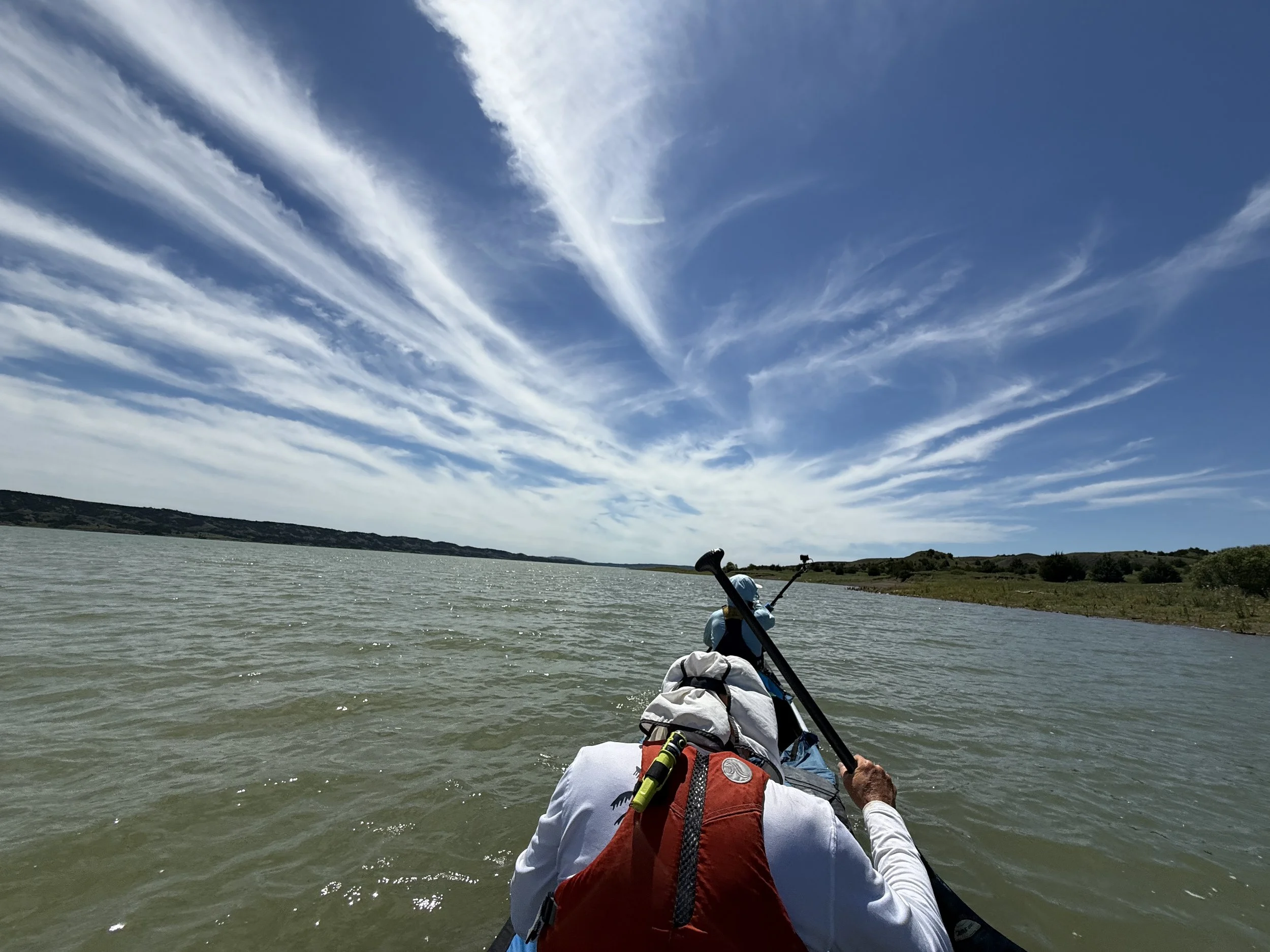
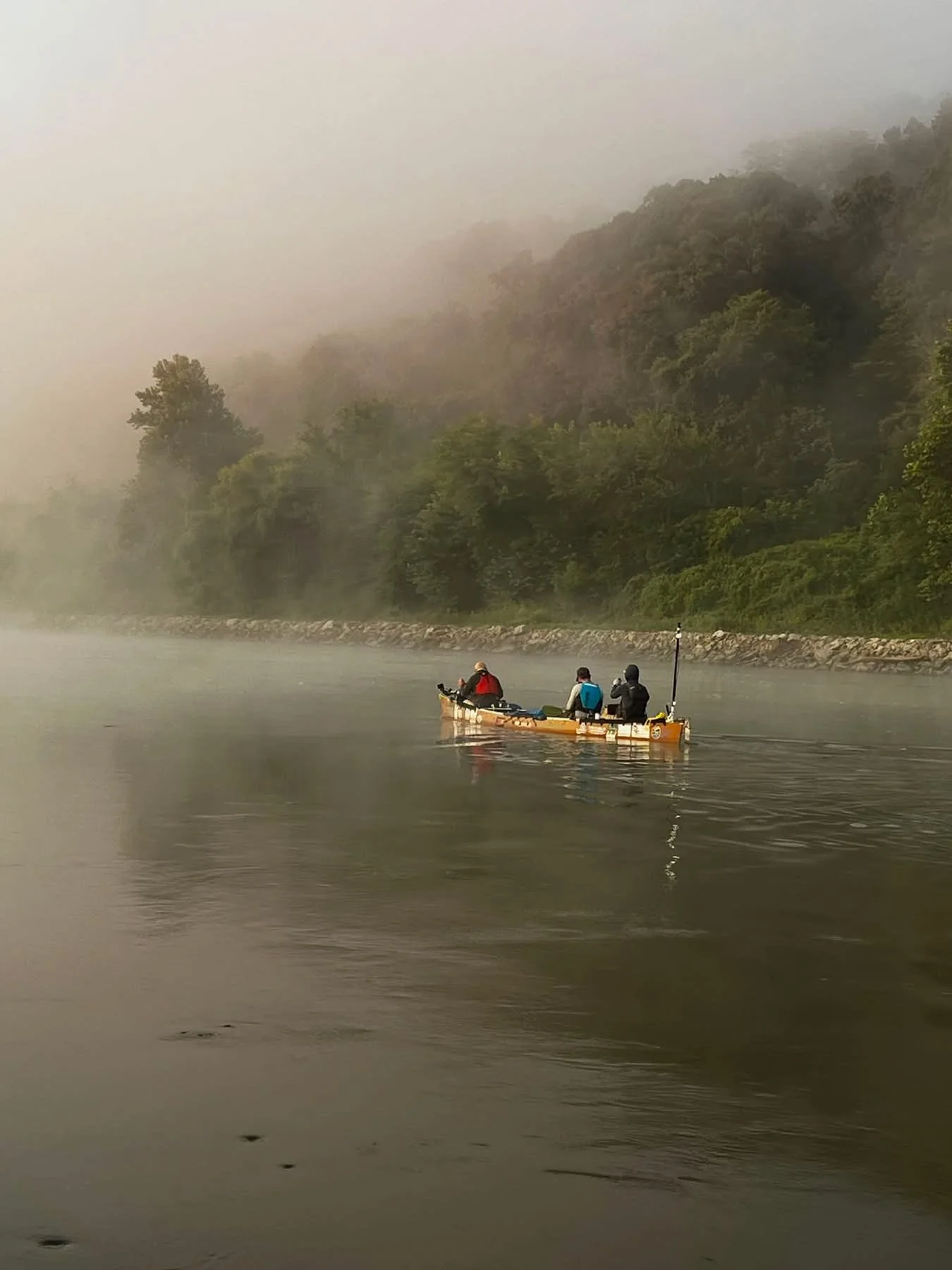
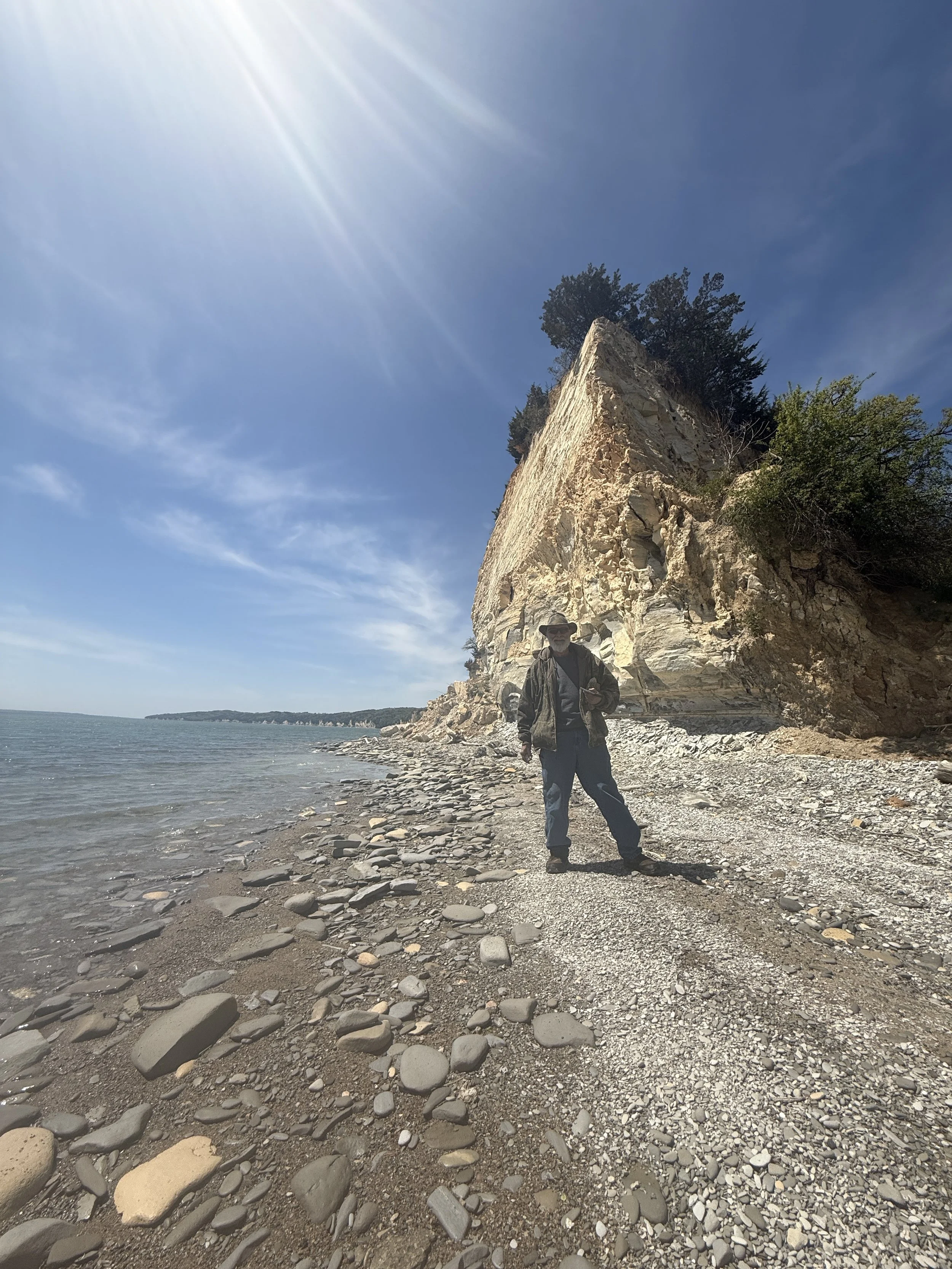
What I will remember the most was how beautiful the river was and how much variety there was in the scenery; it was ever-changing. So many mountains, cliffs, bluffs, rock formations, and cut banks and not just in the Gates of the Mountains or the Missouri River breaks. And the big reservoirs are haunting in how desolate they are, and beautiful in their own right.
Finally, without my amazing teammates and support crew this could never have happened. My teammates put teamwork first, and we took care of each other the whole way. Without prioritizing teamwork I don’t think we would have made it; I think it was even more important than athleticism or paddling skill. And our support crew worked so hard and formed indelible bonds themselves; the power of community is what got us down the river.